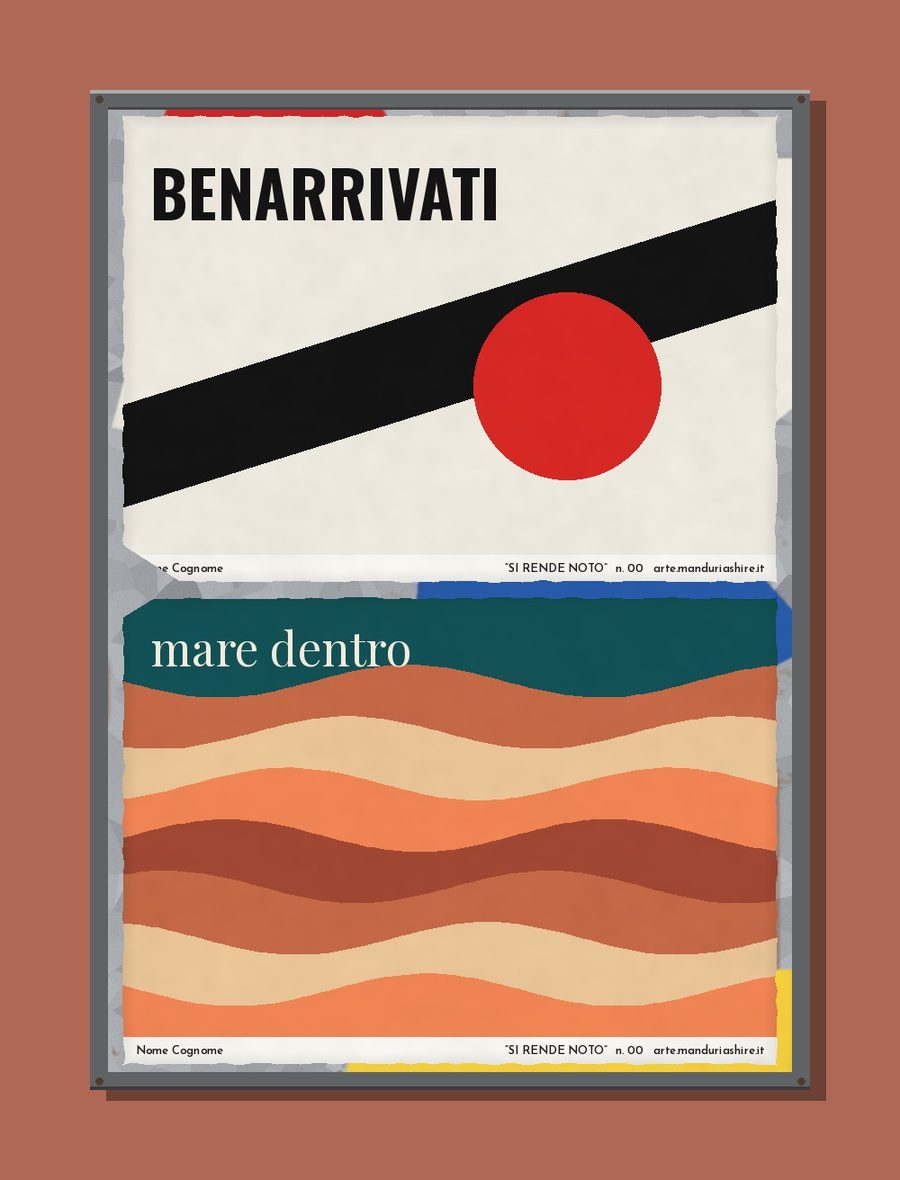
Il progettoThe project
La storia dell’angolo
The corner’s story
Per decenni, qui Manduria ha dato le sue notizie
For decades, this is where Manduria announced its news
Su questo angolo si affiggevano i manifesti a morto e gli avvisi della città. Carta semplice, incollata con la colla da parati su un fondo di lamiera zincata, un po’ arrugginita, chiuso da una cornice in tubolare quadrato. Il manifesto nuovo copriva il vecchio. Chi passava sapeva chi se n’era andato e cosa succedeva in paese.
“Si rende noto”, la formula con cui si aprivano gli avvisi pubblici, riporta su quell’angolo lo stesso gesto, con gli stessi materiali. Cambia il contenuto: a ogni stagione, manifesti d’artista scelti con una call internazionale. Il progetto vive di tre gesti. Si affigge, uno strato sopra l’altro. Si annuncia: nei giorni prima un veicolo d’epoca con l’altoparlante a tromba gira per la città e, da un nastro un po’ gracchiante, rende noto alla cittadinanza il nuovo Avviso, come ai vecchi tempi; il giorno dell’affissione gli avvisi si leggono ad alta voce, come faceva il banditore. Si strappa: una volta l’anno gli strati si staccano con la tecnica che i restauratori usano per le pitture murali, e diventano un’opera collettiva che resta alla città.
This corner used to carry death notices and public announcements. Plain paper, pasted with wallpaper glue onto a slightly rusty galvanised steel sheet framed in square tubing. Each new poster covered the last. Anyone walking past knew who had passed away and what was happening in town.
“Si rende noto”, the phrase that opened every Italian public notice, translates as “Notice is hereby given”. It brings the same gesture back to the same corner, with the same materials. The content changes: every season, posters by artists chosen through an international open call. The project lives through three gestures. Posting, one layer over the other. Announcing: in the days before, a vintage vehicle with a horn loudspeaker drives around town playing a slightly crackly tape that announces the new Notice to the townspeople, just like in the old days; on posting day the notices are read aloud, as the town crier once did. Peeling: once a year the layers are detached with the technique restorers use for wall paintings, and become a collective work that stays with the town.
Come funziona
How it works
Un anno, quattro stagioni, uno strato alla volta
One year, four seasons, one layer at a time
- 1
Il primo tema è “Comunanza”: stare bene insieme, senza sforzo. Dall’Avviso n. 01 la città vota il tema della stagione successiva, online e con un’urna in piazza.
The first theme is “Comunanza”: being well together, effortlessly. From Notice no. 01 the town votes on the next season’s theme, online and with a ballot box in the square.
- 2
Gli artisti rispondono alla call descrivendo l’opera che vorrebbero realizzare, con i lavori precedenti e, se vogliono, un bozzetto.
Artists answer the call by describing the work they would like to make, with their past work and, if they wish, a sketch.
- 3
Il comitato di selezione sceglie le proposte, e solo gli artisti scelti realizzano le opere.
The selection committee chooses the proposals, and only the chosen artists make the works.
- 4
A ogni equinozio e solstizio si affigge la nuova stagione, sopra la precedente. Nei giorni prima un veicolo d’epoca con l’altoparlante a tromba lo annuncia per le strade; il giorno dell’affissione gli avvisi si leggono ad alta voce lungo il percorso.
At every equinox and solstice the new season is pasted over the previous one. In the days before, a vintage vehicle with a horn loudspeaker announces it through the streets; on posting day the notices are read aloud along the route.
- 5
Una volta l’anno gli strati si staccano con lo strappo e diventano un’opera collettiva, in dono alla città.
Once a year the layers are detached and become a collective work, given to the town.
Dove
Where
L’Albo, le stazioni, le vetrine
The Noticeboard, the stations, the shop windows
L’Albo
The Noticeboard
L’angolo storico degli annunci
The town’s historic notice corner
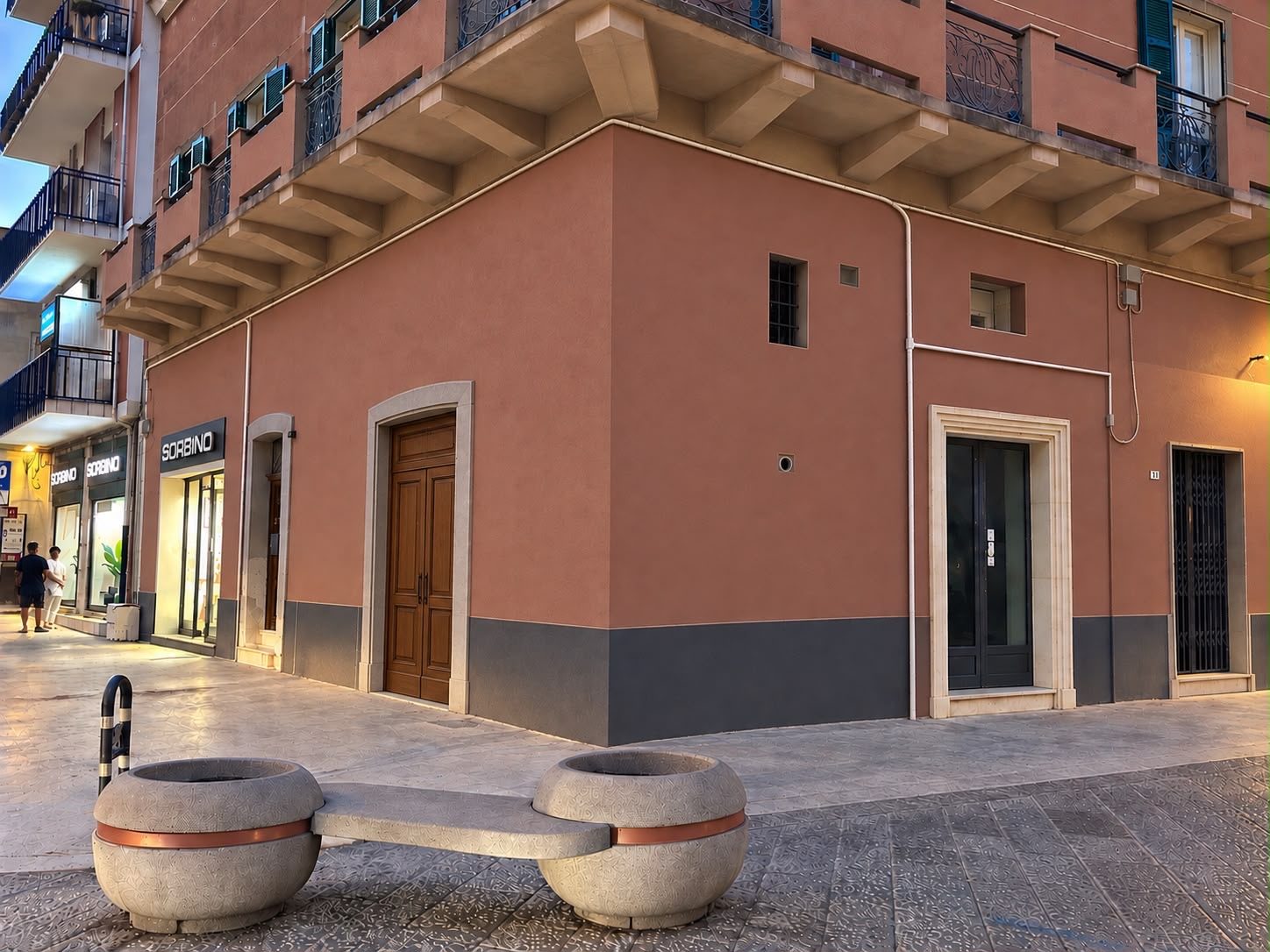
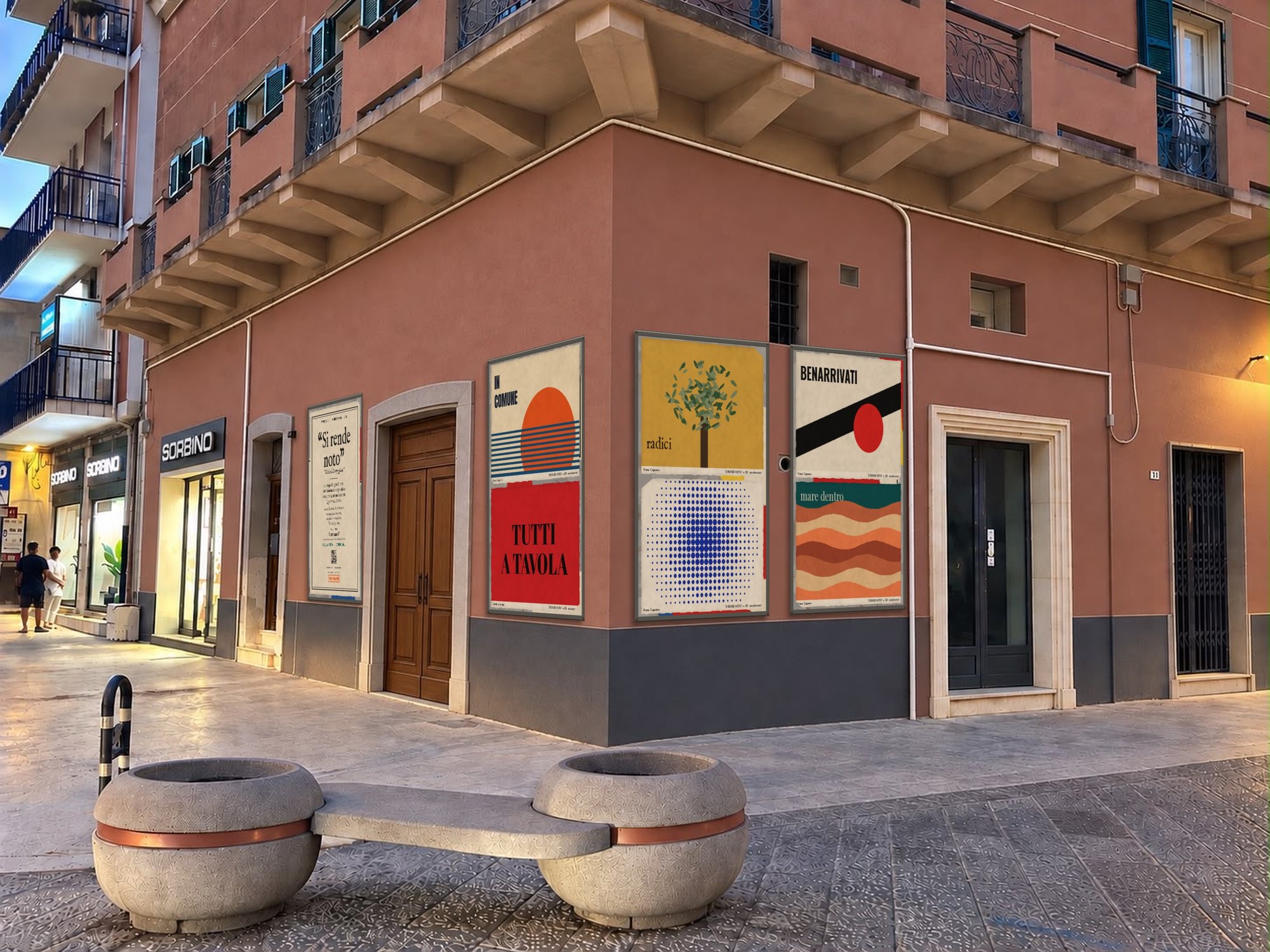
L’angolo di Piazza Garibaldi e Piazza Ciracì, dove gli annunci si sono sempre affissi. Tre lamiere, sei opere a stagione, più il manifesto della call.
The corner of Piazza Garibaldi and Piazza Ciracì, where notices were always posted. Three boards, six works a season, plus the call poster.
Le stazioni
The stations
I muri lungo il percorso
Walls along the walking route
Lamiere con due opere ciascuna sulle facciate di case del centro storico. Si parte subito con l’immobile tra Via Verdi 15 e Via Matteo Bianchi 106: due lamiere, quattro opere. Dall’Avviso n. 01 si aggiungono le altre, dal viale della stazione a Piazza Garibaldi, e i muri delle case abbandonate del centro che i proprietari ci affidano, dove un muro dimenticato diventa un’opera d’arte: offri il tuo. Su ogni stazione una piccola mappa “Sei qui” indica le altre tappe.
Boards carrying two works each on the facades of houses in the old town. The building between Via Verdi 15 and Via Matteo Bianchi 106 starts right away: two boards, four works. From Notice no. 01 the others follow, from the station avenue to Piazza Garibaldi, together with the walls of abandoned houses in the old town that owners entrust to us, where a forgotten wall becomes a work of art: offer yours. Each station carries a small “You are here” map showing the other stops.
- Via Verdi 15 e Via Matteo Bianchi 106
- Via Pacelli 19
- Via Matteo Bianchi 114
- Vico Armirà 10
- Vico III Ferdinando Donno 9
- Via G. L. Marugj 91-93
Le vetrine
The shop windows
I negozi che espongono le opere
Shops showing the works
I negozi del centro che aderiscono espongono una copia delle opere in formato A2, in cornici tutte uguali. Il percorso si fa a piedi, da un annuncio all’altro. Aderisci con la tua attività. Proposta a Confcommercio Manduria.
Shops in the old town that join in show an A2 copy of the works, in identical frames. The route is walked, from one notice to the next. Join with your business. Proposed to Confcommercio Manduria.
Il percorso
The walking route
Dalla stazione alla piazza, un annuncio dopo l’altro
From the station to the square, one notice after another
Il percorso si fa a piedi, con calma, con un amico: qui il tempo ha un altro passo. Parte dalla stazione ferroviaria, percorre il viale e attraversa le strade del centro storico fino all’Albo di Piazza Garibaldi: circa 650 metri dal treno alla piazza, poi i vicoli. Le stazioni del progetto, le vetrine che aderiscono e i luoghi che meritano una sosta lungo la strada, palazzi, chiese, botteghe, stanno su una mappa illustrata, sul sito e stampata in piccolo su ogni stazione con il segno “Sei qui”. La mappa stampata e le copie in vetrina si realizzano con il contributo delle attività che aderiscono e di Confcommercio Manduria. Proposta.
The route is walked, slowly, with a friend: here time keeps a different pace. It starts at the railway station, follows the avenue and crosses the streets of the old town to the Noticeboard in Piazza Garibaldi: about 650 metres from the train to the square, then the alleys. The project’s stations, the shops that join in and the places worth a stop along the way, palazzi, churches, workshops, go on an illustrated map, on the website and printed small on every station with a “You are here” mark. The printed map and the copies in shop windows are funded by the businesses that join in and by Confcommercio Manduria. Proposal.
Così il percorso diventa un motivo in più per scoprire angoli di Manduria che di solito si attraversano senza guardarli.
The route becomes one more reason to discover corners of Manduria that people usually walk past without looking.
La parete
The wall
L’Albo: tre lamiere, sei opere, un avviso
The Noticeboard: three boards, six works, one notice
| Supporto | Support | Lamiera zincata con cornice in tubolare quadrato da 4 cm, su distanziali | Galvanised steel sheet in a 4 cm square tube frame, on spacers |
|---|---|---|---|
| Misura della lamiera | Board size | 154 × 214 cm | |
| Opere per lamiera | Works per board | 2, una sopra l’altra | 2, one above the other |
| Formato dell’opera | Work format | 140 × 100 cm, orizzontale | 140 × 100 cm, landscape |
| Altezza da terra | Height from the ground | da 90 a 300 cm | 90 to 300 cm |
| Stampa e posa | Print and posting | Carta per affissioni, colla da parati, uno strato sopra l’altro | Poster paper, wallpaper glue, one layer over the other |
| Strato di sacrificio | Sacrificial layer | Tra lamiera e carta, per lo strappo di fine anno materiale da definire | Between board and paper, for the yearly peeling material to be defined |
Misure indicative, da confermare con il rilievo e con lo stampatore.
Indicative sizes, to be confirmed after the survey and with the printer.